The Challenge
Advertising followed devices, not people. A brand could buy a television spot and a mobile impression with no way to know both had reached the same household, and no way to tell whether either one moved anyone into a store. Advertisers were asking for the living-room screen and the phone in the same plan, and for proof that the combination showed up at the register.
The Approach
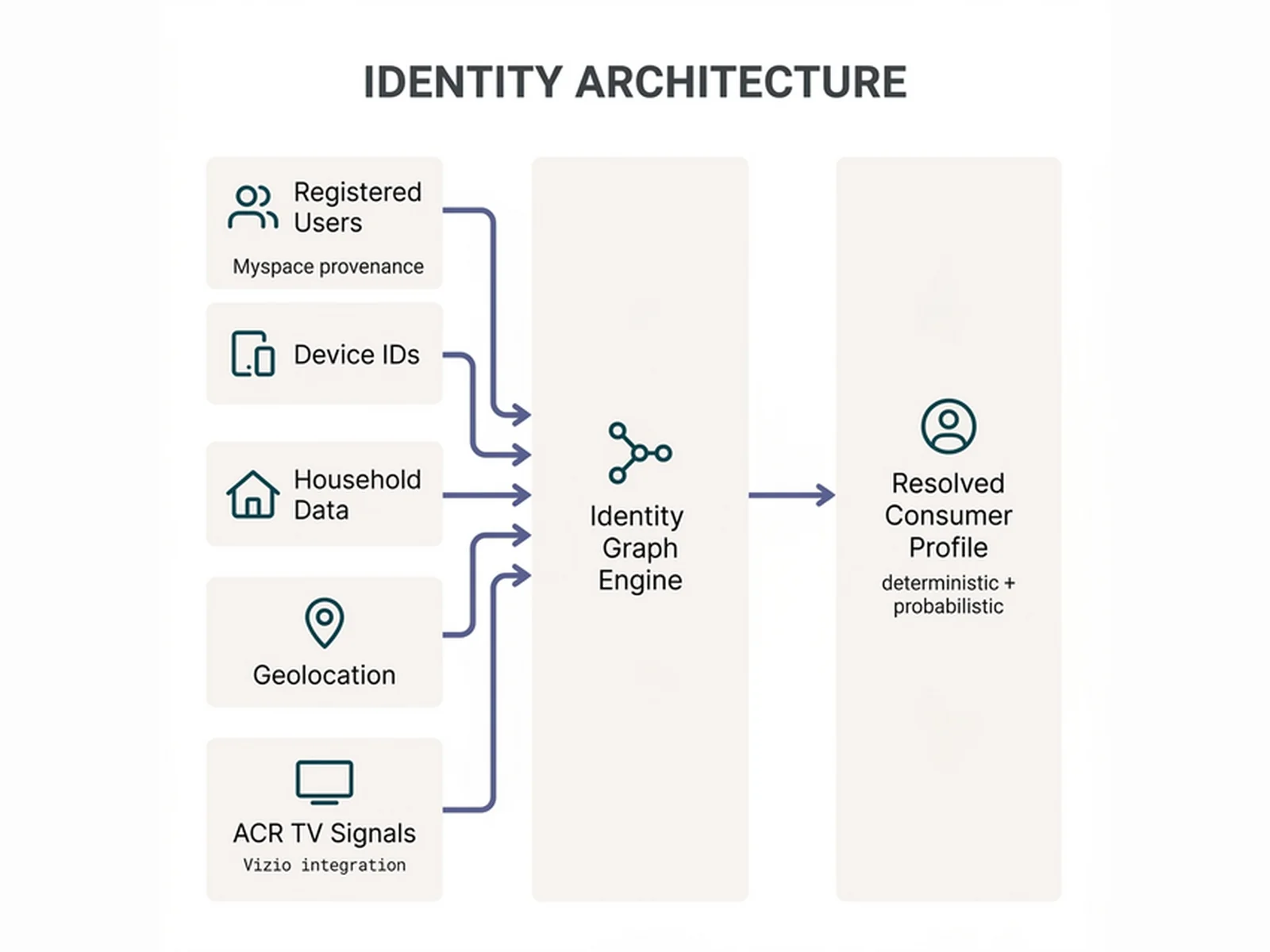
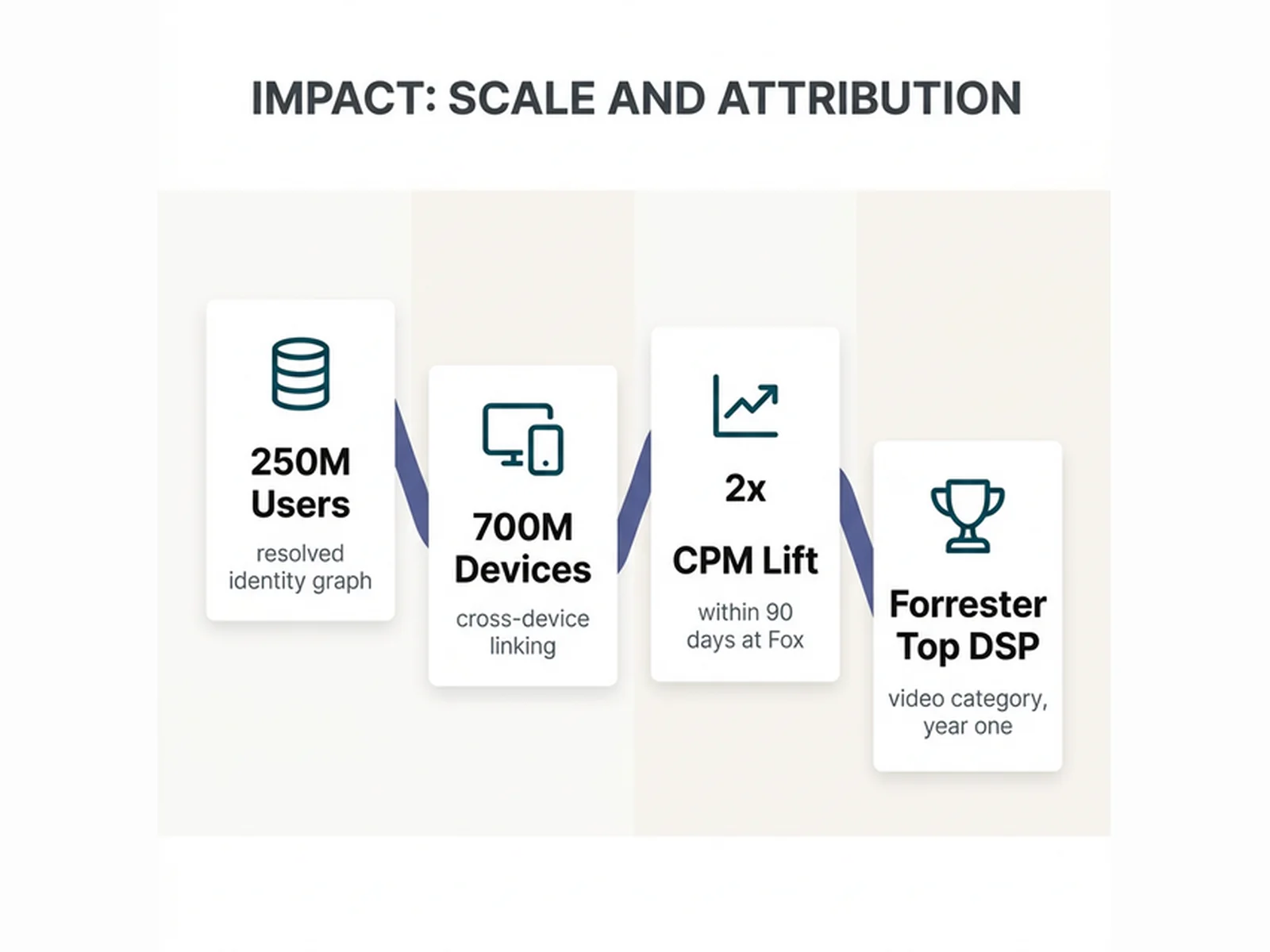
I oversaw creation and launch of Viant Ad Cloud, aligning product, engineering, and commercial teams. My teams built a self-serve DSP that paired an identity graph with ML-based bidding and an ads API. The graph resolved 250M US registered users, much of that first-party data from the Myspace acquisition, across the 700M devices and the households and geolocation histories behind them, and clean-room integrations with partners like Experian matched advertiser data against it without either side handing over raw records. I led the Vizio integration that ingested ACR signals, so an ad seen on the television could set up what the same household saw next on a phone or a laptop, and that linkage let us report on-TV exposure against in-store conversion for advertisers like Mazda and Zales. At Xumo I led the CTV product work, defining the vision and the data strategy that connected TV viewing data into audience and measurement.
Impact
The platform supported hundreds of millions in annual ad spend, and Forrester recognized it as a top video advertising platform in its first year in market. Roughly a billion identities were linked to the devices, households, and location histories behind them, feeding 10B data points a month into targeting and measurement. For advertisers, a television impression stopped being the end of the measurement and became the first step in a sequence that could be followed to a store visit.